Skip to content

Costa Rica

Republic of Costa Rica

Capital: San José

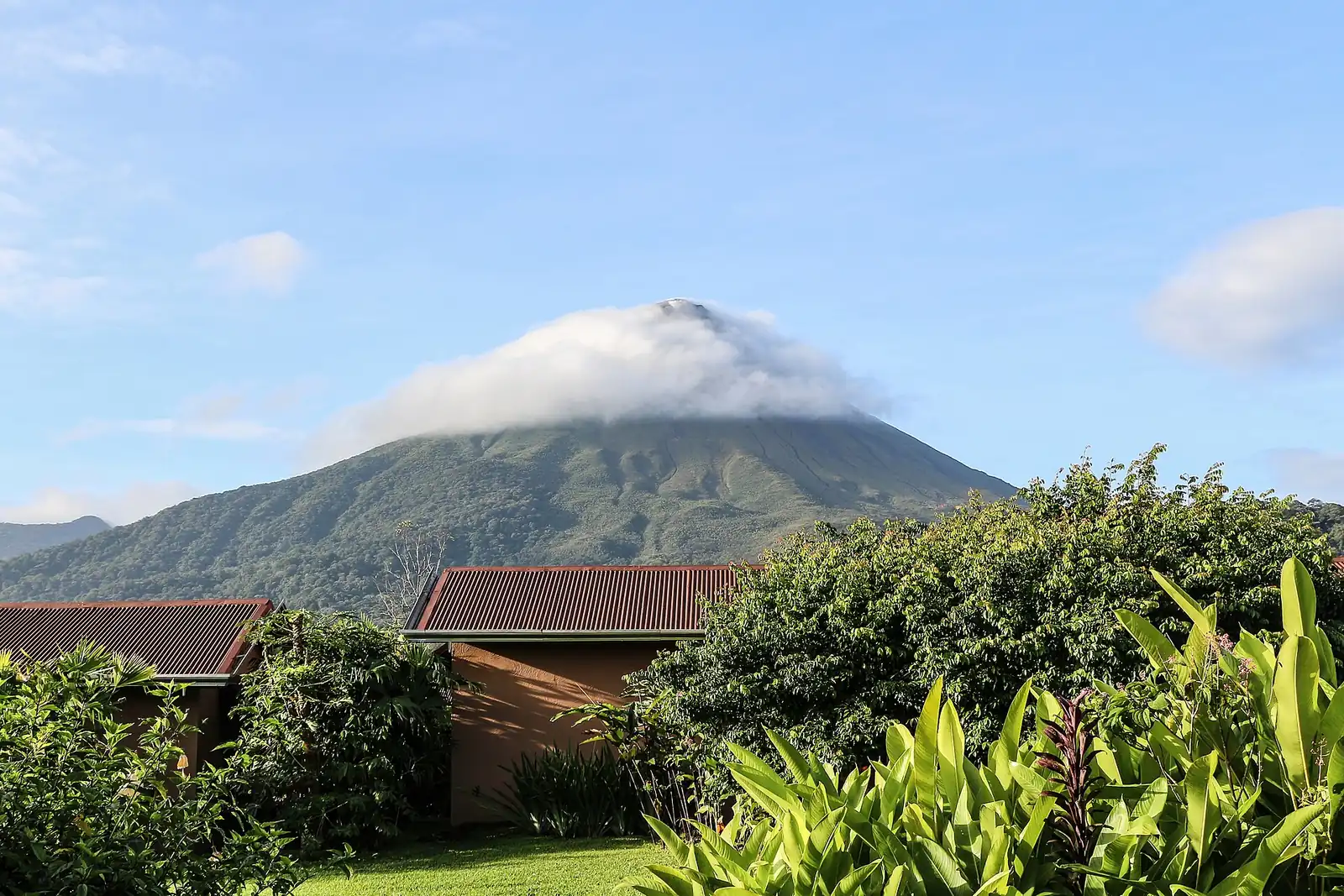
Photo: Bernard Gagnon · CC0 · Wikimedia Commons

Create a trip called “Trip to Costa Rica” and plan it from there.

5,200,000 Population
Spanish Language
CRC Currency
A, B Plug Types

Before you go

Visa, plugs, customs and when to go

The essentials

  • Plugs: type A, B · 120 V / 60 Hz
  • Official language: Spanish

Visa

Choose your passport to see whether you need a visa.

Most visitors get up to 180 days on entry (the officer decides the exact stay). A return or onward ticket is required. Check the Dirección General de Migración list for your passport.

Reviewed on September 17, 2026. Always confirm with the official source before travelling. Official source

See all about before you go

Pura vida

culture

The national phrase. Literally «pure life»: hello, goodbye, thanks, no problem and «how are you» all at once.

  • Answer «¿Cómo estás?» with «Pura vida»
  • Describes a relaxed, grateful attitude
  • Used by everyone, in every situation
  • Not a marketing slogan — locals really say it

Tico time

protocol

Social punctuality is loose; buses and tours, less so. Plan buffers and enjoy the pace.

  • 15–30 minutes late is normal for social plans
  • Tours, shuttles and park entries run on the clock
  • Sunset is around 17:30–18:00 all year — plan drives before dark
  • Roads are slow: 100 km can take 3 hours

A country without an army

culture

Abolished in 1948; the budget went to education and health. Ticos are proud of it and of their stable democracy.

  • One of the oldest democracies in Latin America
  • High literacy and life expectancy
  • Renewable electricity most of the year
  • Peace and nature are core to national identity

Costa Rica is small, green and famously relaxed. «Pura vida» is a greeting, a thank-you and a philosophy: take it easy, be kind, don't sweat the small stuff. The country abolished its army in 1948 and invests in schools, health and national parks — a quarter of its territory is protected. Ticos (the locals' own nickname) are polite, indirect and proud of their peace and their nature.

Do

  • Book national park tickets online in advance serious
  • Carry small bills and colones for sodas, buses and rural areas moderate
  • Drive in daylight and expect slow roads moderate
  • Use reef-safe sunscreen and refill a water bottle (tap water is safe in most of the country) minor

Don’t

  • Leave anything visible in a parked car, especially at beaches serious
  • Feed, touch or chase wildlife serious
  • Swim at beaches with rip-current warnings (many Pacific beaches have them) serious
  • Rely on card payments outside cities and resorts moderate

Etiquette Tips

greeting

Buenos días first

Greet before asking anything — in shops, buses, offices. Skipping the greeting is rude.

essential
dress

Casual but neat

Beachwear stays at the beach. In San José and churches dress normally; a light rain jacket is always useful.

nice to-know
social

Ask before photographing people

Especially in indigenous territories and small towns.

recommended
gift

Bring something small

When invited home: pastries, fruit or something from your country.

nice to-know

When to go

December · January · February

Rating 5/5 Crowds: peak Prices: peak

Dry season on the Pacific and the Central Valley: sunny days, green-to-golden Guanacaste, high prices around Christmas and Easter.

Events: Fiestas de Zapote (San José, late Dec–Jan) · Palmares festival (Jan) · Envision (Uvita, Feb–Mar)

March · April · May

Rating 4/5 Crowds: high Prices: expensive

Still dry until late April, then the first rains bring the green back. Quetzal nesting season in Monteverde and Los Quetzales.

Events: Semana Santa (everything closes; beaches fill up) · Día de Juan Santamaría (11 Apr)

June · July · August

Rating 3/5 Crowds: moderate Prices: moderate

Green season: sunny mornings, afternoon downpours, lower prices and fewer people. The Caribbean coast is drier now. Whales arrive in the south Pacific.

Events: Veranillo de San Juan (short dry spell, late June–July) · Turtles at Tortuguero (Jul–Oct) · Humpback whales in Marino Ballena (Jul–Oct)

September · October · November

Rating 3/5 Crowds: low Prices: budget

Wettest months on the Pacific (Sept–Oct), but the driest on the Caribbean: Puerto Viejo and Tortuguero shine. November dries out everywhere.

Events: Independence Day (15 Sept, lantern parades) · Limón Carnival (Oct)

Climate: Temperature depends on altitude more than season: San José ~24 °C, the coasts 30 °C+, Monteverde and Chirripó cool and misty. The Caribbean has no real dry season and is driest in Sept–Oct.

Our editorial guide, reviewed September 17, 2026. Checked against: visitcostarica.com · sinac.go.cr · migracion.go.cr · ict.go.cr

Money

Currency and tipping

The essentials

  • Currency: Costa Rican Colón (CRC)
  • Tipping at restaurants — 10% included
See all about money

Currency

Costa Rican Colón (CRC)

Symbol: ₡

Tipping Guide

Restaurants

10% included

By law a 10% service charge and 13% VAT are added to the bill. Extra tip only for exceptional service.

Hotels

₡1,000–2,000 per bag

Housekeeping ₡1,000–2,000 per day is appreciated.

Taxis

Round up

Not expected. Guides and drivers on tours: 10–15% is customary.

US dollars are accepted almost everywhere for tips; small bills only.

Our editorial guide, reviewed September 17, 2026. Checked against: visitcostarica.com · sinac.go.cr · migracion.go.cr · ict.go.cr

Getting around

Airports, buses, driving and apps

The essentials

  • Traffic drives on the right
  • Main airport: SJO — Juan Santamaría International Airport
See all about getting around

Nature first

travel

National parks have entry caps, timed slots and online-only tickets. Wildlife is the point of the trip: go early and go slow.

  • Book SINAC tickets online before you go — no sales at the gate in the busiest parks
  • Hire a certified guide: you will see ten times more
  • Never feed or touch animals; keep 5 m from sloths and monkeys
  • Drones and single-use plastics are banned in parks

Addresses without street names

travel

Directions are given from landmarks: «200 m south of the church, 50 m east». One block ≈ 100 m.

  • Save the coordinates of your lodging
  • Waze works well and is what taxis use
  • Ask locals; everyone gives directions this way
  • Some landmarks no longer exist («the old fig tree»)

Distances are short but roads are slow and winding. Most travellers rent a car (4×4 for Monteverde and rural roads) or use shared shuttles between the main hubs. Public buses are cheap, safe and reach almost everywhere, just slowly. Domestic flights save a day to the Osa Peninsula or Tortuguero.

Major Airports

SJO Juan Santamaría International Airport Hub 18 km to center
  • Orange airport taxis 30-60 min ≈ US$30-35
  • Uber 30-60 min ≈ US$20-30
  • Tuasa / Station Wagon 45-70 min ≈ ₡700
  • Shared shuttles (Interbus, Gray Line) Varies US$50-60 per leg
LIR Guanacaste Airport (Daniel Oduber) 12 km to center
  • taxi 15-20 min ≈ US$25 to Liberia; US$60-80 to Tamarindo
  • Shared shuttles 1-1.5 h to Tamarindo US$25-40

Between cities

bus

Interurban bus companies (Tracopa, Autotransportes Mepe, Empresarios Unidos…)

  • San José – La Fortuna (4 h)
  • San José – Quepos / Manuel Antonio (3.5 h)
  • San José – Puerto Viejo (5 h)
  • San José – Liberia (4 h)
  • San José – Monteverde (4.5 h)

Buy at the terminal the day before; most companies have no online sales. Shared shuttles (Interbus, Gray Line, ≈ US$50-60 per leg) run door to door between the same hubs.

flight

Sansa Airlines

  • SJO – Puerto Jiménez
  • SJO – Drake Bay
  • SJO – Tortuguero
  • SJO – Quepos
  • SJO – Tamarindo

30-60 minute hops (US$80-150) that save a full day of driving to the Osa or the Caribbean.

Book with Sansa Airlines
train

Incofer (Tren Interurbano)

  • San José – Heredia
  • San José – Cartago
  • San José – Alajuela

Commuter service at peak hours only; handy to reach Cartago and the Orosi valley.

Driving

Traffic drives on the right

Your home licence is valid for the length of your legal stay.

Mandatory insurance is added by rental companies (budget US$15-25/day on top of the headline price). A 4×4 is worth it for Monteverde, Nosara, Drake Bay and the rainy season. Do not drive at night: potholes, no lights, wildlife.

Useful apps

  • Waze — Navigation — what every driver and taxi uses; road closures in real time
  • Uber — Rides in San José, Liberia, Jacó and the Central Valley
  • SINAC en línea — Official national park tickets (timed entry) Open SINAC en línea

Tips

  • Distances are short on the map and long on the road: 100 km ≈ 2.5-3 hours.
  • Buy park tickets online days ahead; Manuel Antonio and Poás sell out.
  • Bring cash: rural buses, sodas and the ferry are cash only.
  • Fill the tank before Monteverde, Nosara and the Osa; stations are scarce.
  • Sunset is at ~17:45 all year; arrive before dark.

Our editorial guide, reviewed September 17, 2026. Checked against: visitcostarica.com · sinac.go.cr · migracion.go.cr · ict.go.cr

Safety & health

Emergencies, official advice and health

The essentials

  • Emergencies: 911
  • Tourist police: +506 2586 4620
See all about safety & health

Emergency numbers

Embassies

Health

  • Mosquitoes (dengue)

    Dengue circulates year-round in lowlands. Use repellent, especially at dawn and dusk. No malaria in tourist areas.

  • Sun and rip currents

    UV is intense at this latitude. Many Pacific beaches have strong rip currents and no lifeguards: ask locals where it is safe to swim.

  • Yellow fever

    Required only if arriving from a country with yellow fever risk (parts of South America and Africa).

Staying safe

Safe by regional standards; the main risks are petty theft and car break-ins. Violent crime concentrates in areas tourists rarely visit. Tap water is drinkable in most of the country.

Areas to avoid

  • Downtown San José after dark (La Merced, Coca-Cola bus area)
  • Isolated beaches at night
  • Some neighborhoods of Limón and Puntarenas at night

Common scams

  • «Helpful» strangers at flat tyres on the highway (slashed on purpose)
  • Fake parking attendants at beaches
  • Unofficial taxis at the airport (use the orange airport taxis or Uber)
  • Card skimming at remote ATMs
Women travellers
Generally comfortable for solo women; catcalling exists in cities. Standard precautions at night.
LGBTQ+ travellers
Same-sex marriage legal since 2020. Open scene in San José, Manuel Antonio and Puerto Viejo; rural areas are conservative but polite.
Solo travellers
Easy to travel solo: shared shuttles, hostels and tours everywhere. Group tours make parks cheaper.

Our editorial guide, reviewed September 17, 2026. Checked against: visitcostarica.com · sinac.go.cr · migracion.go.cr · ict.go.cr

Food

What to eat and how to eat out

The essentials

  • Gallo pinto — Rice and beans fried together with onion, pepper and Lizano sauce. The national breakfast, with eggs and tortillas.
  • Casado — The set lunch: rice, beans, fried plantain, salad, a tortilla and your choice of chicken, fish, beef or eggs.
  • Ceviche tico — White fish cured in lime with cilantro, onion and pepper; served with crackers or patacones.
See all about food

Tico food is simple, fresh and built on rice and beans: gallo pinto for breakfast, a casado for lunch, ceviche and patacones on the coast. Coffee is excellent and everywhere. Portions are generous and sodas (family diners) are the best value in the country.

Signature Dishes

Gallo pinto

Rice and beans fried together with onion, pepper and Lizano sauce. The national breakfast, with eggs and tortillas.

budget

Casado

The set lunch: rice, beans, fried plantain, salad, a tortilla and your choice of chicken, fish, beef or eggs.

budget

Ceviche tico

White fish cured in lime with cilantro, onion and pepper; served with crackers or patacones.

moderate

Olla de carne

Slow beef and root-vegetable stew (yuca, chayote, plantain). Weekend comfort food.

budget

Chifrijo

Bar snack: rice, beans, chicharrón, pico de gallo and tortilla chips in one bowl.

budget

Rice and beans caribeño

Rice and beans cooked in coconut milk with Panamanian pepper, often with chicken in Caribbean sauce.

moderate

Etiquette Tips

  • Sodas and casados

    A «soda» is a family diner. Order the casado (rice, beans, plantain, salad, protein). Tip is usually included as a 10% service charge.

Our editorial guide, reviewed September 17, 2026. Checked against: visitcostarica.com · sinac.go.cr · migracion.go.cr · ict.go.cr

Local slang

How people talk, and words worth knowing

The essentials

  • Pura vida — Hello / thanks / all good
  • Buenos días — Good morning
  • Con permiso — Excuse me (passing by)
  • Un casado, por favor — A casado (set lunch), please
See all about local slang

Indirect politeness

communication

Ticos avoid a blunt «no». «Maybe» or «we will see» often means no; read the tone, not the words.

  • Use «usted» with strangers and elders; «vos» is common among friends
  • Diminutives soften everything: «un momentico», «ahorita»
  • «Ahorita» can mean now, soon or never
  • Raise problems gently and privately

Common Phrases

Essential words and phrases in Spanish

Pura vida

/POO-rah VEE-dah/

Hello / thanks / all good

Any time

Buenos días

/BWEH-nos DEE-ahs/

Good morning

Until noon; always greet first

Con permiso

/kon per-MEE-so/

Excuse me (passing by)

Buses, crowds

Un casado, por favor

/oon ka-SAH-do por fa-VOR/

A casado (set lunch), please

Sodas

¿Cuánto cuesta?

/KWAN-to KWES-ta/

How much is it?

Shops, taxis

Mae

/MAH-eh/

Dude / mate

Very informal, among friends

Tuanis

/twa-NEES/

Cool, nice

Slang

¿Dónde está la parada?

/DON-deh es-TA la pa-RA-da/

Where is the bus stop?

Getting around

La cuenta, por favor

/la KWEN-ta por fa-VOR/

The bill, please

Restaurants

Con mucho gusto

/kon MOO-cho GOOS-to/

You are welcome

The Tico reply to «gracias»

Our editorial guide, reviewed September 17, 2026. Checked against: visitcostarica.com · sinac.go.cr · migracion.go.cr · ict.go.cr

Top Highlights

Must-see attractions and experiences

nature

Arenal Volcano

La Fortuna

The perfect cone above La Fortuna: lava-flow trails, hot springs and hanging bridges around it.

Full day
  • Clearest views Feb–Apr, early morning
  • Combine with Tabacón or a cheaper hot spring
nature

Monteverde Cloud Forest

Monteverde

The most famous cloud forest in the Americas: quetzals, hanging bridges and mist.

3-4 hours
  • Hire a guide to spot birds
  • Bring a rain jacket whatever the season
nature

Manuel Antonio National Park

Quepos

Monkeys, sloths and postcard beaches in a forest by the sea. Timed online tickets only.

4-5 hours
  • Closed on Tuesdays
  • Book on the SINAC site days ahead
nature

Tortuguero

Tortuguero

Jungle canals reached by boat; green turtles nest on the beach Jul–Oct.

2-3 days
  • Night turtle walks only with a licensed guide
  • Pack for rain
neighborhood

Puerto Viejo de Talamanca

Puerto Viejo de Talamanca

Afro-Caribbean town of reggae, rice and beans and bicycles; Punta Uva and Cahuita nearby.

2-3 days
  • Rent a bike for the beaches south of town
  • Driest months: Sept–Oct
landmark

National Theatre of Costa Rica

San José

The 1897 neoclassical theatre at the heart of San José, next to the Gold Museum.

1 hour
  • Cheap symphony tickets
  • Combine with the Central Market

More places

From the catalogue — open data plus the community

Expert Q&A

Real questions from travelers, answered by experts

No questions yet

Be the first to ask about traveling to Costa Rica!

Report an issue

Show diagnostics

Environment


Console errors


Failed requests